




Lightspeed POS Review 2026: Is It Right for Your Business?
Lightspeed promises to run your whole business — in store and online — from one connected platform. We went hands-on with its retail and restaurant POS, payments, inventory, and ecommerce tools to see whether it lives up to “built to scale,” and exactly who it’s right for.

This review contains affiliate links. If you sign up through them we may earn a commission at no extra cost to you. Our opinion is based on hands-on testing, not commissions.
The verdict in one line
A powerful, scalable cloud POS with deep inventory and true omnichannel selling — best for growing retail and hospitality businesses.
What we liked
- One platform for in-person & online
- Deep inventory & reporting
- Dedicated retail & restaurant products
- Scales smoothly across locations
What could be better
- Premium pricing vs basic POS systems
- More features than a tiny shop needs
- Add-ons can raise the total cost
What is Lightspeed?
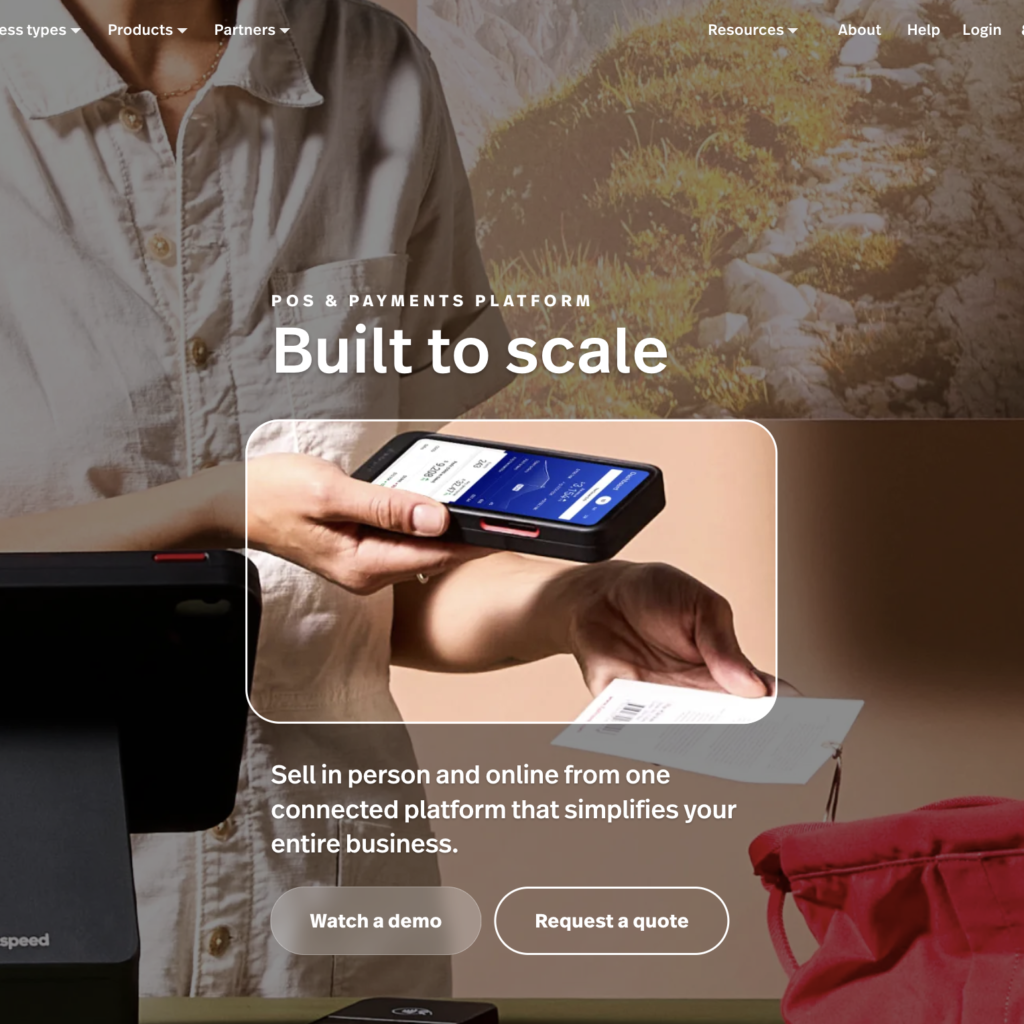
Lightspeed is a cloud-based point-of-sale and payments platform built for retail and hospitality businesses that want to sell both in person and online without stitching together half a dozen tools. Its pitch is right there on the homepage — a “POS & payments platform built to scale” that lets you “sell in person and online from one connected platform that simplifies your entire business.”
That word — scale — is the key to understanding Lightspeed. It isn’t trying to be the cheapest register app for a single market stall; it’s aimed at businesses with real inventory, multiple locations, or ambitions to grow into them, where unified data across channels actually moves the needle.
Key features we tested
The point of sale
The POS itself is fast, modern, and genuinely pleasant to use on both desktop and iPad. Lightspeed splits into dedicated products for retail and for restaurants, so you’re not forced into a one-size-fits-all setup. Retail gets product variants, matrices, and purchase orders; hospitality gets floor plans, menu management, and tableside ordering. That specialization shows in the day-to-day workflow.
Payments
Lightspeed Payments folds card processing directly into the platform, so sales, refunds, and reporting all live in one place rather than reconciling a separate processor. The integrated mobile reader (shown on their homepage) means you can take payment anywhere on the floor. If you already use a third-party processor, check compatibility — the tightest experience is with Lightspeed’s own payments.
Inventory management
This is where Lightspeed pulls ahead of simpler systems. Multi-location stock tracking, purchase ordering, supplier management, and variant handling are all robust, and the catalog tools save real time for businesses with large or complex inventories. For a growing retailer, this depth is often the single biggest reason to choose it.
Ecommerce & omnichannel
Lightspeed connects your physical store and online shop so inventory, customers, and reporting stay in sync across both. Sell on the floor, sell on the web, and the numbers reconcile automatically — no double entry, no drift. For businesses serious about omnichannel, this unified picture is the core appeal.
Reporting & analytics
The analytics are a genuine strength. Sales trends, inventory performance, staff and customer insights, and advanced reporting on higher tiers give owners the kind of visibility that’s hard to get from entry-level POS systems. It’s the sort of data that helps you buy smarter and spot what’s actually selling.
How it scores
Pricing
Lightspeed uses tiered pricing that scales with the features and number of locations you need, generally starting around $89 per month per location on an annual plan and climbing for advanced inventory, analytics, and omnichannel tools. Payment processing and optional add-ons factor into the real total. It sits at the premium end of the POS market — you’re paying for depth and scalability rather than bare-bones simplicity — and a free trial plus custom quotes are available so you can size it to your business.
See Lightspeed in action
Start a free trial or watch a demo and explore the POS, payments, and inventory tools for yourself.
Start your free trial →Who is Lightspeed best for?
After testing, the picture is clear. Lightspeed is an excellent fit if you are:
- A growing retailer with real inventory complexity across one or more locations.
- A restaurant or hospitality business that needs floor plans, menus, and tableside ordering.
- An omnichannel seller who wants in-store and online to share one source of truth.
- A business that plans to scale and wants a system it won’t outgrow in a year.
It’s a weaker fit if you’re a very small or pop-up business that just needs a simple register, or if budget is the single overriding factor — in those cases a lighter, cheaper POS will likely do the job.
The verdict
Lightspeed earns its “built to scale” tagline. The POS is polished, the payments are integrated, and the inventory and reporting depth are genuinely best-in-class for growing businesses — all tied together by omnichannel selling that keeps your store and website in lockstep. The trade-off is price and complexity: this is a premium platform, and a tiny shop on a tight budget may pay for power it won’t use.
But for retail and hospitality businesses with ambition, it’s a clear 4.5 out of 5 and an easy recommendation. Try it free and see whether the unified workflow fits how you sell.
Frequently asked questions
Is Lightspeed POS worth it in 2026?
Yes, for the right business. It’s worth it for retail and hospitality businesses that need deep inventory, strong reporting, and unified in-person and online selling. You can start a free trial here.
How much does Lightspeed cost?
Pricing is tiered and typically starts around $89 per month per location billed annually, with higher plans adding advanced features. Payment processing and add-ons affect the total, and custom quotes are available.
Is Lightspeed good for restaurants and retail?
Yes. Lightspeed has dedicated products for both, with retail features like inventory matrices and hospitality features like floor plans, menus, and tableside ordering.
Does Lightspeed work online and in person?
Yes — that’s its core strength. It connects your physical store and online shop so inventory, customers, and reporting stay in sync across both channels automatically.
Our verdict: 4.5 / 5 — built to scale
Powerful POS, integrated payments, and deep inventory for growing businesses. Start your free trial today.
Try Lightspeed free →